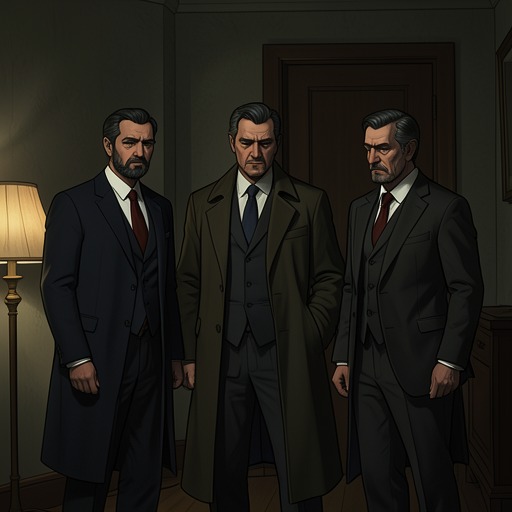
Javier Mora
Fool Me OnceJavier Mora is Theo Mora’s father, a Mexican immigrant who built a life with Raisa Mora and worked as a landscaper in Philadelphia. His effort to open a path to a better school for Theo connects the family to the wealthy Lockwoods—and to the circumstances surrounding Theo’s death. In Raisa’s recollection, Javier’s warmth and ambition coexist with a lasting conviction that he helped put his son in danger.
Background and Character
Javier came from Mexico and met Raisa when she was a poor young woman living in San Antonio. They eventually settled in Philadelphia after a cousin helped Javier find landscaping work. He mowed lawns for wealthy families on the Main Line, including the Lockwoods. The work placed him in contact with people whose wealth and influence were far removed from his own circumstances, but Raisa remembers that Javier was readily liked: he was smart, ambitious, personable, and had a way of drawing people to him.
A faded family photograph gives Maya Stern a glimpse of Javier as Raisa remembers him. He stands behind the children beside a younger, happier-looking Raisa, stocky, with a large mustache and a wide smile. The image also includes Theo and two younger boys whom Maya takes to be Theo’s brothers. Raisa carefully returns the photograph to its place, making it a tangible record of a family life already marked by loss.
Theo’s Education and Death
Javier wanted Theo to have better opportunities and hoped to get him into Franklin Biddle Academy. A wealthy Lockwood financier, who employed Javier and was a cousin of the school’s headmaster, offered to help. The academy was seeking scholarship students to support its claims of diversity; through the financier’s intervention with his cousin, Theo gained a place. Javier’s ambition for his son thus brought Theo into a privileged school where, as Raisa later feared, he might be treated as an outsider because he was poor and new.
After Theo died, an autopsy attributed his death to alcohol poisoning. Raisa and Javier met with the coroner themselves, and she recalls that a party had got out of control and that many boys had been drinking. Javier did not accept that explanation as a complete account of what happened. He suspected that wealthier boys might have pressured Theo to drink because he was the poor newcomer, although Raisa says he did not know exactly what had occurred. He wanted to make a public issue of Theo’s death rather than let the explanation stand unquestioned.
Grief, Guilt, and Death
The family received a settlement, but Javier regarded it as blood money; Raisa did not see it the same way. She thought the rich boys might have pushed Theo, but also believed Javier’s anguish came from blaming himself for having urged Theo toward a school where he did not belong. Raisa admits that she blamed him too, though she tried to conceal it. In her account, Javier could read that blame in her face, including while he was ill and as she cared for him.
Raisa remembers Javier expressing his suspicion about his own grief in stark terms: “Grief don’t do that to a man. Guilt does.” The line does not settle what happened to Theo or prove what Javier believed about every detail. Instead, it reveals how the loss had become inseparable from his sense of responsibility. Javier died of cancer two years after Theo. Raisa presents cancer as the reported cause, then trails off, leaving her unease about his death unresolved rather than supplying another explanation.
Memory and Significance
Javier’s story reaches Maya through Raisa’s recollection, the photograph, and the account of Theo’s schooling and death. He is absent from the present-day conversation, yet his choices and suspicions shape its meaning: the scholarship that represented a chance at a better life also placed Theo in a setting Raisa later associated with pressure and exclusion. Javier’s death adds another loss to the family’s history, while Raisa’s confession that he saw her blame preserves an intimate, painful dimension of their marriage. His memory is therefore neither simply that of a loving, ambitious father nor solely that of a man who failed his son; it remains bound to the unresolved question of what happened at the party and to the guilt he carried afterward.